Experts warn India's new anaemia plan lacks evidence as salt fortification gains ground
Public health experts say the government should not roll out DFS and rice fortification at scale until a long-delayed national anaemia survey is published.
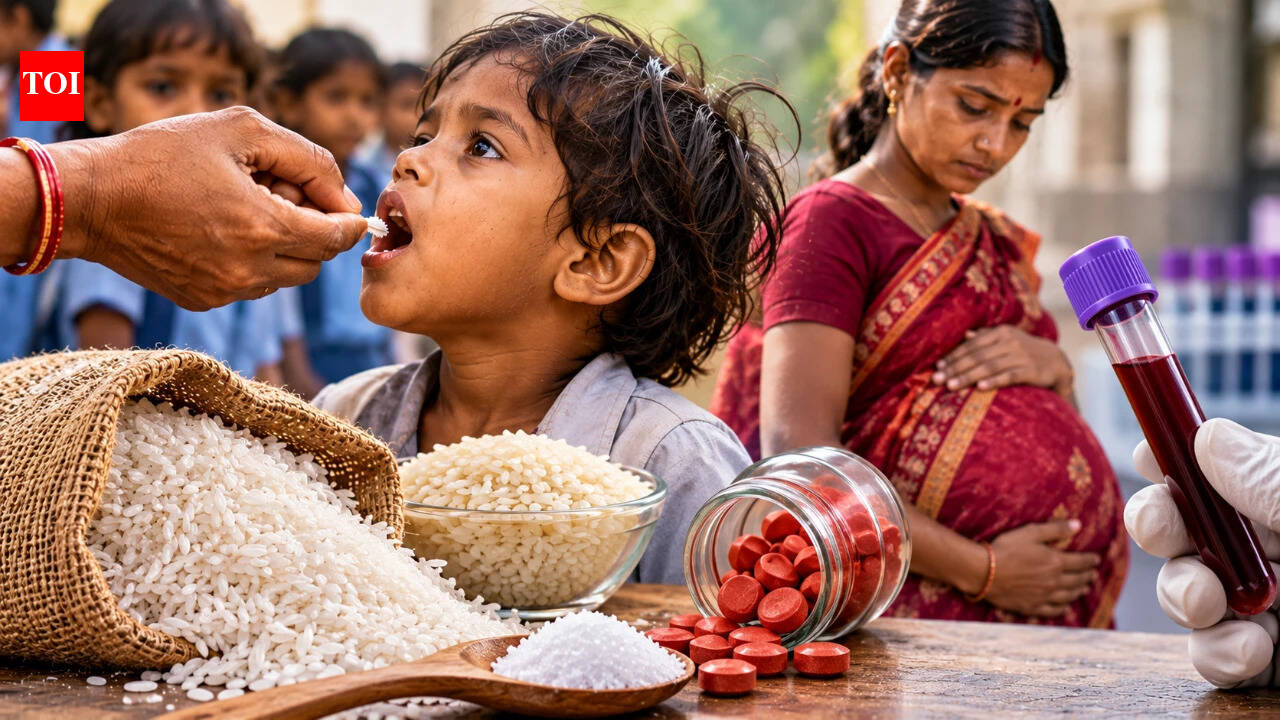
Public health experts are urging the government to slow down. India is moving its anaemia strategy toward double fortified salt (DFS), which adds both iron and iodine. Experts warn that the push is happening without enough evidence to show it works. They say that could waste public money.
The data that would settle the question is still locked away. A national anaemia survey was completed in November 2025, but its results have not been released. An RTI reply from the National Institute of Nutrition said in September that analysis was still underway. The survey, first launched in December 2022, has been renamed SAMPADA. It uses venous blood samples, which are widely regarded as the most reliable way to measure anaemia. It covers about 2.6 lakh people, but it will give state-level estimates. The National Family Health Survey (NFHS), by contrast, is larger and gives district-level figures.
The gap matters. India has had no official anaemia data since NFHS-2019-21. The government set that survey aside because it used finger-prick blood samples, which studies have found less reliable. So policymakers are working without a clear baseline. The 2016-18 Comprehensive National Nutrition Survey, which used venous samples, found lower anaemia rates than the later NFHS. The new survey is expected to show lower numbers still. It could also reveal whether areas that rolled out iron-fortified rice saw real drops in anaemia.
Past programmes give mixed signals. Tamil Nadu began distributing DFS through school meals in 2004 and later extended it to the public distribution system and child nutrition schemes. Even so, NFHS surveys from 2015-16 and 2020-21 found that more than half of children and women in the state were anaemic. A study in Uttar Pradesh, funded by the Gates Foundation, found that DFS reduced the risk of iron deficiency among women of reproductive age. It did not reduce anaemia itself. Supply problems were partly to blame. In Madhya Pradesh, anaemia in young children rose in the NFHS-5 survey, even though official reports had shown high uptake of DFS.
Why this matters is simple. Anaemia affects a large share of Indians, especially women and young children. A fortification scheme that does not cut anaemia wastes money and delays other fixes. Experts want the SAMPADA data released in full, with clear state-wise results, before any new intervention is scaled up. For more detail, read the original report at Times of India.