Kerala SMA families spot 'clinical trial' label on free generic drug at SAT Hospital
A switch to a 97% cheaper generic has left parents of children with a rare, life-threatening disease asking what, exactly, is in the bottle.
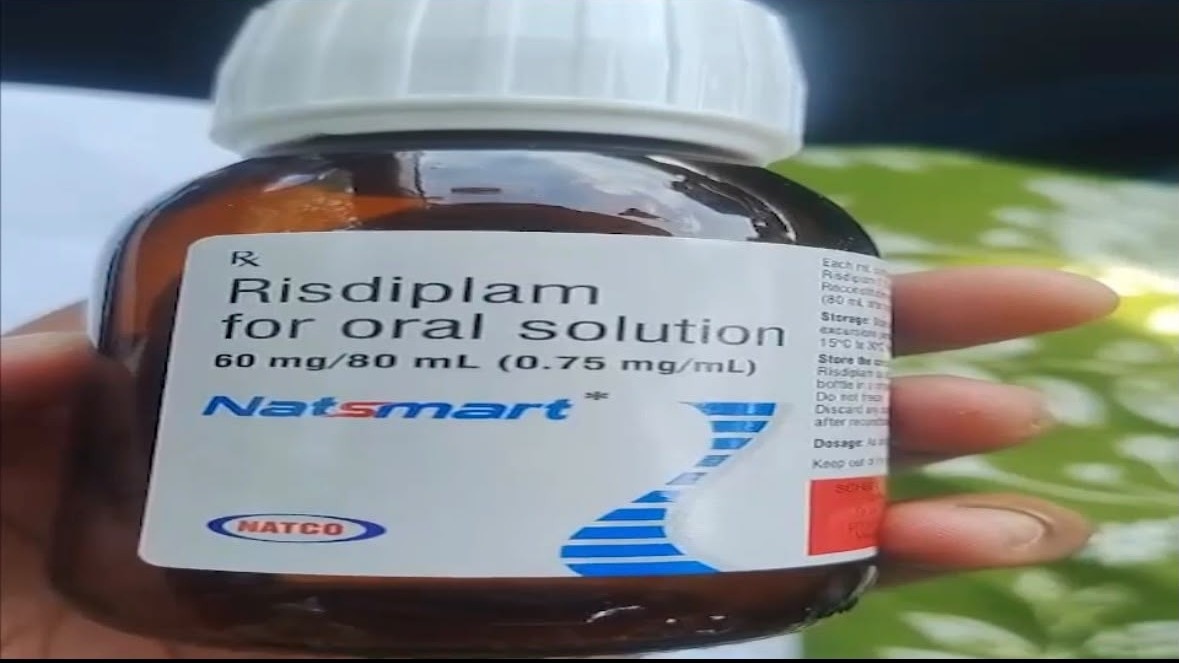
When a medicine bottle says "Physician Sample" and "For Clinical Trials Only," it is not the sort of thing a parent wants to read about a drug their child takes every day. That is what families of children with spinal muscular atrophy (SMA) say they found this week at Sree Avittom Thirunal (SAT) Hospital in Thiruvananthapuram. The hospital had begun handing out a generic version of risdiplam under Kerala's free SMA programme.
The generic, Natco Pharma's Natsmart, replaces Roche's Evrysdi, which beneficiaries have received since 2022. Parents' first worry was whether their children had been moved from a proven medicine to an experimental one. The row has since widened into questions about regulatory approval, the evidence that a generic works as well as the original, and whether families were told about the change and agreed to it.
The stakes are high. SMA is a rare genetic disorder that progressively weakens muscles and can be fatal in its severe forms. Risdiplam does not cure it, but it helps the body make more of the survival motor neuron protein that patients lack, and it can slow the disease. It works best when started early, though older patients can benefit too.
Kerala has been the only Indian state offering free SMA therapy since 2022. The effort grew into the Kerala United Against Rare Diseases (KARE) programme in 2023, covering eligible children under 12 through a hub-and-spoke care model and a patient registry. About 200 children are estimated to be on it. Roche's price to the state was negotiated, but it was never disclosed.
The price gap explains why the switch is tempting. The imported drug could cost roughly Rs 72 lakh a year for the first two years and Rs 56 lakh a year after that, with bottles priced as high as Rs 6.2 lakh. After the Delhi High Court allowed Natco to make a generic last year, the company launched Natsmart at Rs 15,900 a bottle, nearly 97% cheaper. For a state footing the bill, that is a very large saving.
But cheaper is not the same as clear. Generics normally have to show they behave like the original in the body, a test known as bioequivalence. A "clinical trial" or "sample" label in the middle of a public programme leaves families unsure whether that test is done, or whether they are being enrolled in something without being asked. The issue reached the political stage on October 20, when Leader of the Opposition and former chief minister Pinarayi Vijayan raised it.
The saving for the public purse is real, and so is the trust a rare-disease programme depends on. Parents of children with SMA have little room for guesswork about what goes into those bottles. Until the state explains the label, the approval and the consent process, the scheme's biggest cost may be confidence rather than rupees. Read the original report at India Today.